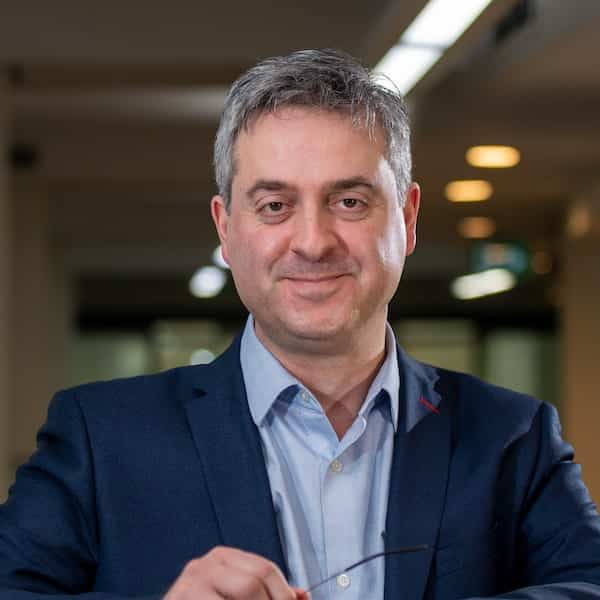
Dr. Mustafa Al-Zoughool
PhD, MSc
Senior Toxicologist
Joined RSI in 2024
- Highly respected, trusted, and recognized professional with a cross-continental career
- Assisted in launching two Master programs in Saudi Arabia and Kuwait
- Vice Dean Academic Affairs for 4 years in the College of Public Health at Kuwait University
Dr. Al-Zoughool has maintained a long-standing relationship with Risk Sciences International, both as a scientific collaborator and as a co-investigator on complex international projects. His work with RSI focuses on high-level public health risk modeling, mechanistic data analysis, and toxicological risk assessment of major environmental contaminants in air, soil, and water, including formaldehyde, lead, and 1,4-dioxane. His research also extends to methodological innovation and the development of evidence-based strategies for environmental and occupational health policy.
His collaborations with RSI have encompassed diverse domains, including the health effects of air pollution, derivation of points of departure for carcinogenic risk assessment, exposure-based toxicokinetic modeling, occupational asthma, disease burden estimation, and quantitative modeling of emerging infectious diseases. He is a frequent contributor to RSI’s global research initiatives, including projects on carcinogen characterization, risk prioritization under climate change, and population health scenario modeling.
Pre-RSI
Dr. Mustafa Al-Zoughool earned his MSc in Analytical Toxicology from the University of Jordan and his PhD in Toxicology from the University of Cincinnati in the United States, where his doctoral research focused on the molecular pathways of chemical-induced carcinogenesis.
He subsequently joined the International Agency for Research on Cancer (IARC) as a postdoctoral fellow, where he led a study examining the relationship between cigarette smoking and the risk of endometrial cancer. Later, at the McLaughlin Centre for Population Health Risk Assessment at the University of Ottawa, Dr. Al-Zoughool led several multidisciplinary projects spanning molecular toxicology, cancer epidemiology, mathematical modeling of prion diseases, and population health risk assessment.
His career has also included academic appointments at universities in Saudi Arabia and Kuwait, where he taught courses in biology, toxicology, environmental health, and infectious diseases, and supervised numerous graduate research projects in environmental health risk assessment. At both institutions, he played a key role in establishing new master’s programs in public health.
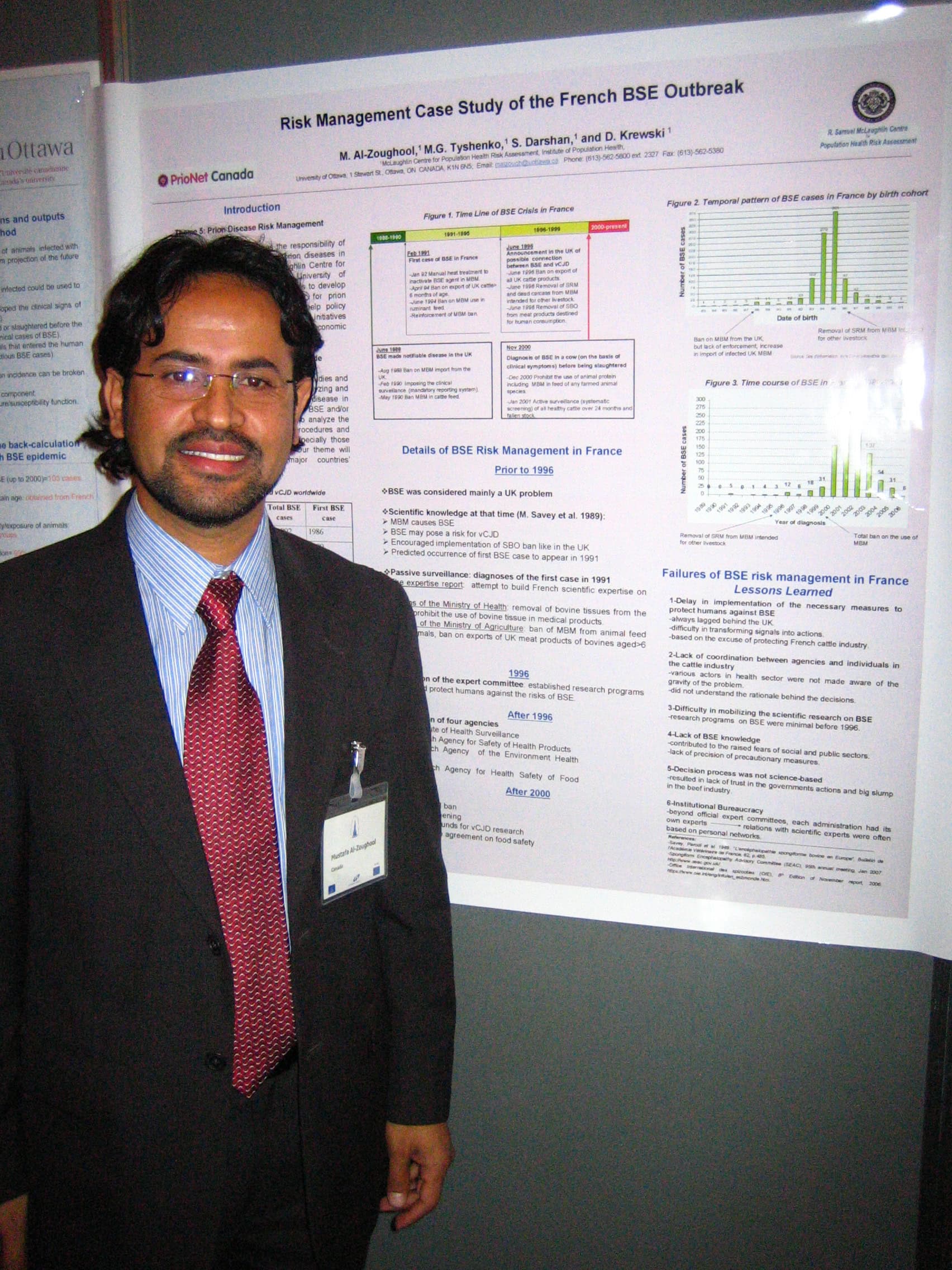
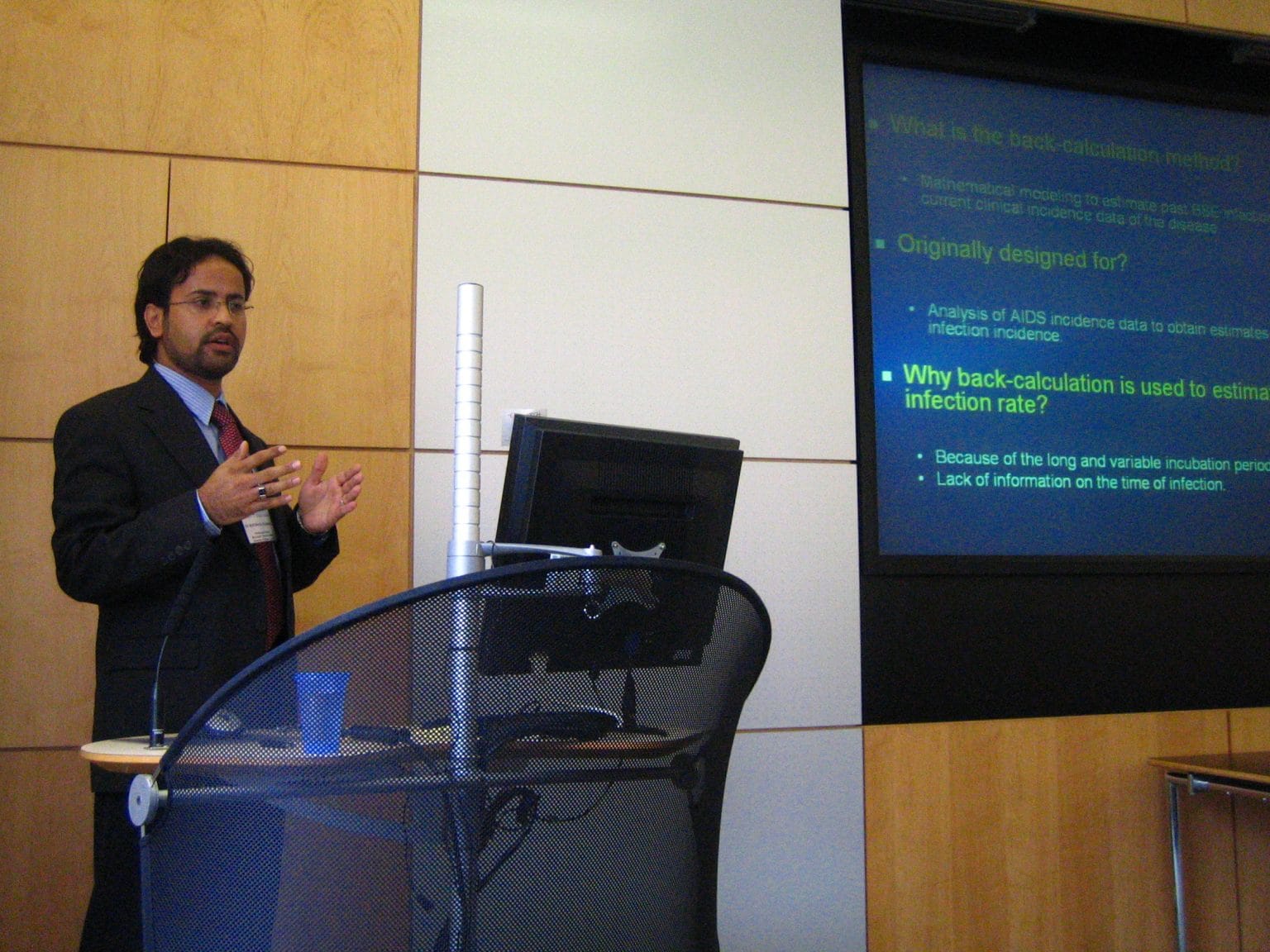
Presenting a poster in the same Prion2007 conference in Edinburgh, Scotland.
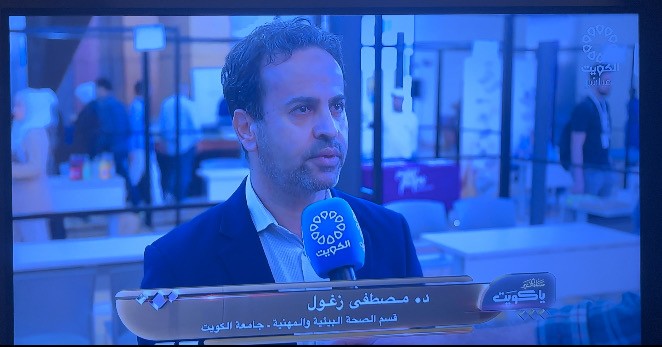
Mustafa Al-Zoughool at work
Publications associated with Mustafa Al-Zoughool
Health effects of radon: a review of the literature.
Case-control study of radon and lung cancer in New Jersey.
Effect of N-glucuronidation on urinary bladder genotoxicity of 4-aminobiphenyl in male and female mice.
Randomized controlled trial: effects of diet on DNA damage in heavy smokers.
Exposure of mice to arsenic and/or benzo[a]pyrene does not increase the frequency of Aprt-deficient cells recovered from explanted skin of Aprt heterozygous mice.
Co-mutagenic activity of arsenic and benzo[a]pyrene in mouse skin.

Search all publications
Outside RSI
Mustafa is an avid traveler with a strong passion for exploring new places and cultures. He has a deep appreciation for nature and enjoys spending quality time with his family, taking long hikes, jogging, fishing, and camping.
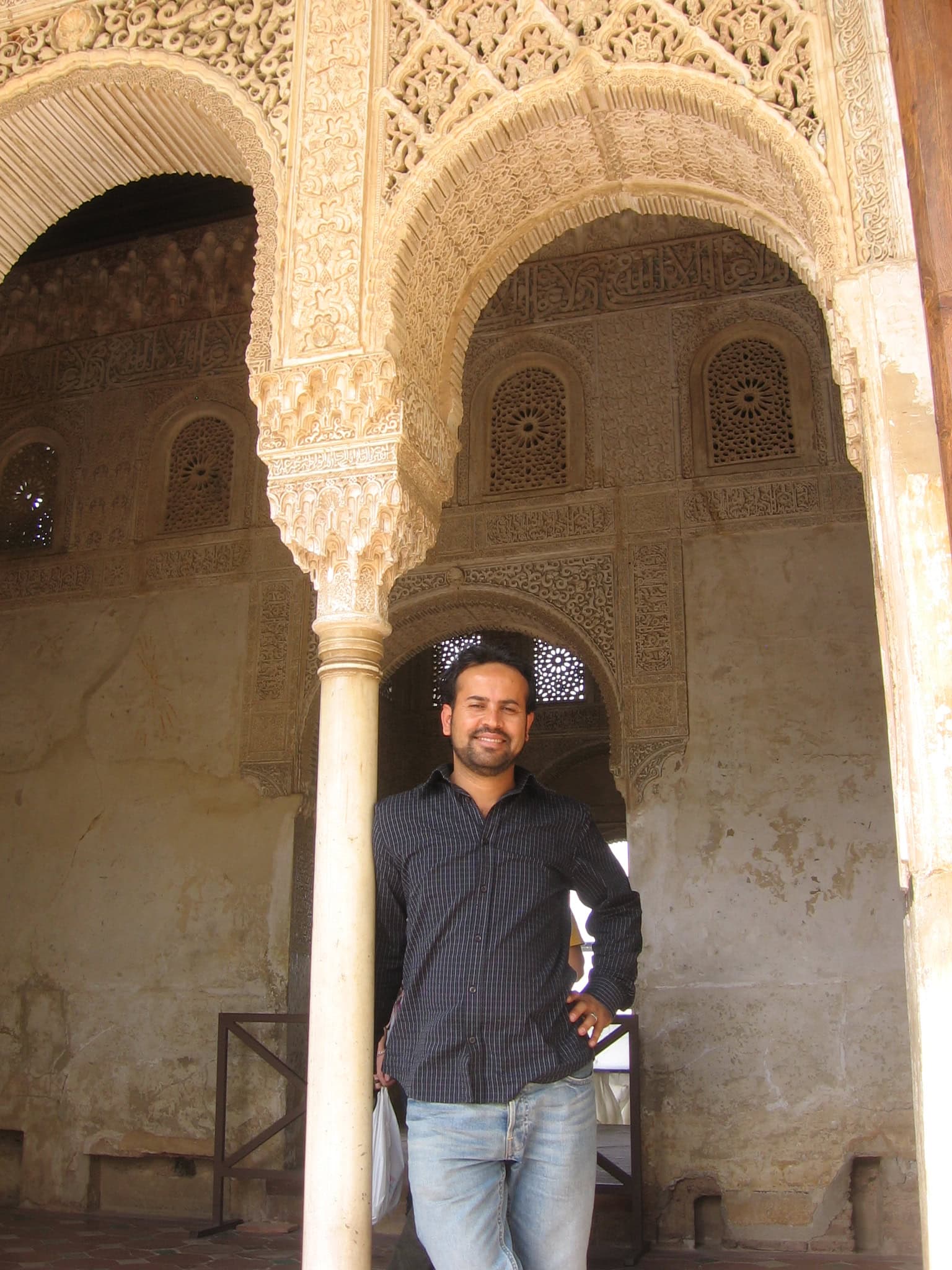
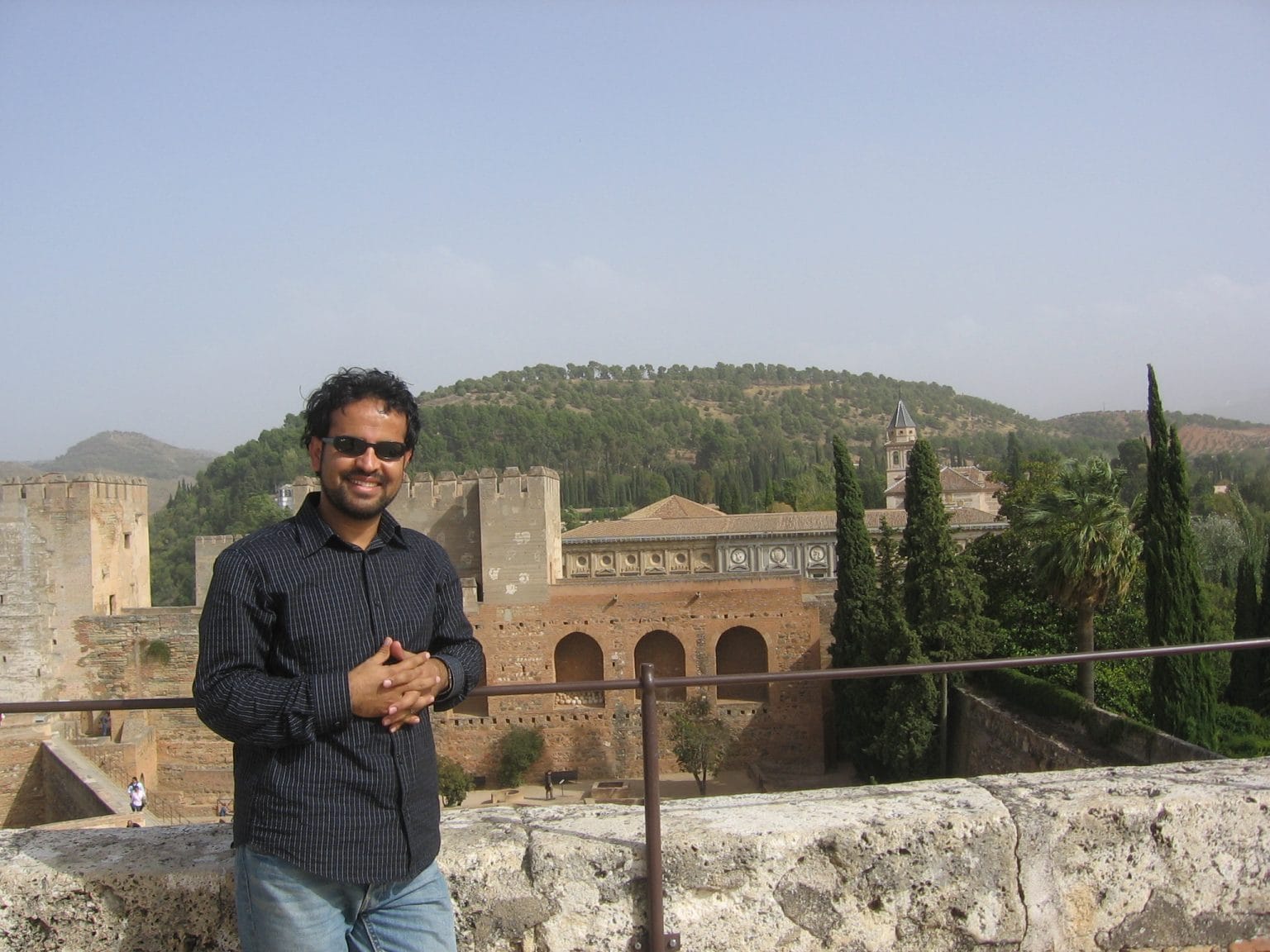
At Alhambra Palace, Granada, Spain back in October 2008
A few more images...