A Risk Sciences International Case Study

Characterizing uncertainty in MAF values estimated using the KEMI MAF

Ottawa River Stones

Client: European Chemical Industry Council – Long-Range Research Initiative (Cefic LRI)

Listing of the client in no way affirms the client's support, sponsorship, or validation in any form of Risk Sciences International or the RSI staff member(s) who conducted this project during their stay with RSI or prior to joining the company. This case study is displayed for informative purposes only to demonstrate the capacity of RSI staff members. This case study reveals no proprietary information or information deemed sensitive.

Project description:

Characterizing uncertainty in MAF values estimated using the KEMI MAF

The client sought to improve understanding of uncertainties surrounding the application of mixture assessment factors (MAFs) for aquatic receptors, specifically those estimated using the KEMI methodology. While the KEMI MAF approach is considered technically robust, its assumptions—particularly about chemical-specific controls, detection limits, and assessment group composition—introduce potential uncertainties that could lead to either over- or underestimation of environmental risks.

To support the development of a comprehensive scientific publication, RSI was tasked with quantifying and exploring these uncertainties using available monitoring and ecotoxicity data. This included recalculating MAF values for surface water samples from various European surveys, analyzing temporal variability in contaminant concentrations using longitudinal data from the Erft River, and evaluating how different tiers of ecological risk assessment influence MAF size. A core component of the project was the integration of alternative control scenarios, such as the potential replacement of toxic substances or preemptive reductions by wastewater treatment plant operators, into existing MAF calculations.

The final deliverable was a peer-reviewed manuscript synthesizing these findings, offering clearer insights into the limitations and variability of MAF estimates. This work aimed to support more transparent and scientifically grounded approaches to mixture risk assessment in regulatory settings.

Start: 2023

End: 2023

Experts related to this case study

Paul Price

Senior Analyst

Dr. Paul Price is a Senior Analyst at Risk Sciences International (RSI), bringing over four decades of experience as a pioneer in exposure science and chemical risk assessment. Since joining RSI in 2019, Dr. Price has focused on advancing mixture...
Read More about Paul Price

More RSI Case Studies

RSI presents a very small selection of case studies to highlight some of its key work.
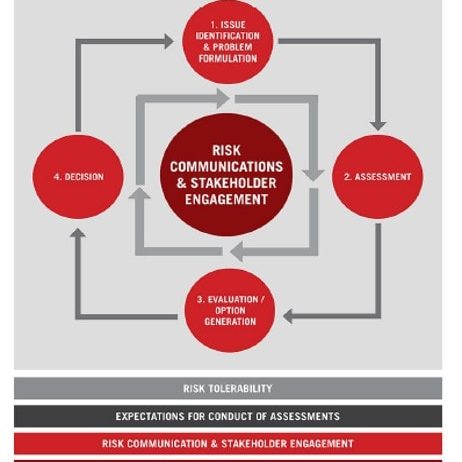
Risk-based decision making framework

The Alliance of Blood Operators (ABO) sought to move its members toward a consistent, transparent approach to risk-based decision-making. Having worked through the development of a framework, the organization now wanted formal adoption, external validation, and practical application to real-world...
Read More about Risk-based decision making framework

Evaluation of Toxicological Data on Experior

To support the evaluation of a new veterinary pharmaceutical product intended for use in bovines, a scientific review was requested of submitted toxicological data related to the active compound LY488756. This compound, proposed under the product name Experior, had been...
Read More about Evaluation of Toxicological Data on Experior

Risk-Based Optimization of Enforcement Activities

A federal agency required scientific support to enhance the effectiveness of its environmental enforcement activities. This involved identifying and analyzing the risk factors—both environmental and human health-related—that contribute to the likelihood and impact of regulatory offences. The objective was to...
Read More about Risk-Based Optimization of Enforcement Activities

Food Inspection Scientific Analysis & Risk Modelling

In support of ongoing efforts to modernize Canada's food inspection system, a request was issued for scientific and analytical expertise to enhance two critical risk-based decision tools: the Establishment-based Risk Assessment (ERA) and Importer Risk Assessment (IRA) models. These models...
Read More about Food Inspection Scientific Analysis & Risk Modelling

Technical Support for Risk-Based Decision Making (RBDM)

To enhance the oversight of cannabis production under its regulatory mandate, the Cannabis Directorate sought expert support in developing a risk-based decision-making framework tailored to its compliance and enforcement responsibilities. The directorate aimed to better assess and respond to non-conformance...
Read More about Technical Support for Risk-Based Decision Making (RBDM)

Applying New Assessment Methods (NAMs) for Assessing Semi-Volatile Organic Compounds (SVOCs) in Indoor Residential Environments

Health Canada sought expert support in advancing its efforts to develop screening values for semi-volatile organic compounds (SVOCs) commonly found in residential indoor environments. Previous work on indoor air contaminants had focused on volatile organic compounds (VOCs), where screening values...
Read More about Applying New Assessment Methods (NAMs) for Assessing Semi-Volatile Organic Compounds (SVOCs) in Indoor Residential Environments