A Risk Sciences International Case Study

Risk-based decision making framework
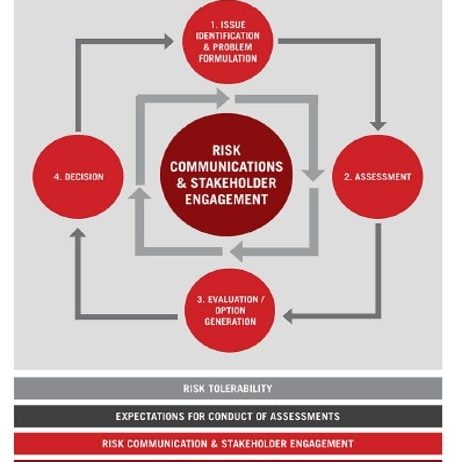
Risk Based Decision Making diagram

Client: Alliance of Blood Operators

Listing of the client in no way affirms the client's support, sponsorship, or validation in any form of Risk Sciences International or the RSI staff member(s) who conducted this project during their stay with RSI or prior to joining the company. This case study is displayed for informative purposes only to demonstrate the capacity of RSI staff members. This case study reveals no proprietary information or information deemed sensitive.

Project description:

Risk-based decision making framework

The Alliance of Blood Operators (ABO) sought to move its members toward a consistent, transparent approach to risk-based decision-making. Having worked through the development of a framework, the organization now wanted formal adoption, external validation, and practical application to real-world decision contexts. ABO’s request was twofold: to embed the framework as a standing resource available to all members, and to strengthen its credibility through peer-reviewed publication and international visibility.

Member organizations also asked for practical demonstrations of the framework in action. Canadian Blood Services, for example, requested support in applying the approach to the development of its national plasma collection strategy. At the same time, ABO sought further elaboration of specialized components of the framework, most notably the risk tolerability process. This included the creation of additional tools and guidance that would enable decision-makers to evaluate ethical and risk trade-offs in a structured, defensible way.

The overarching purpose was to provide blood operators worldwide with a systematic decision process that could handle scientific, ethical, and stakeholder considerations in a transparent manner. By adopting and applying the risk-based framework, ABO aimed to improve consistency across organizations, enhance defensibility of major policy choices, and strengthen public trust in the blood system.

Start: 2016

End: 2017

Experts related to this case study

Emma Hartnett

Vice-President Risk Modelling and Simulation

Dr. Emma Hartnett is Vice-President, Risk Modelling and Simulation at Risk Sciences International (RSI), where she has been a foundational member since its inception in 2006. A globally recognized authority in quantitative risk assessment (QRA), she specializes in developing risk...
Read More about Emma Hartnett

Anne Wiles

Senior Analyst

Dr. Anne Wiles joined Risk Sciences International (RSI) in 2008, where she currently serves as a Senior Analyst specializing in risk communication, perception, and governance. With a distinctive blend of expertise in language, regulation, and the use of science in...
Read More about Anne Wiles

More RSI Case Studies

RSI presents a very small selection of case studies to highlight some of its key work.

External Peer Review of the Draft Screening Assessment Report on Selected C3-C5 Alcohols

To support the quality and defensibility of regulatory decision-making under the Canadian Environmental Protection Act, 1999 (CEPA), Health Canada engaged Risk Sciences International to coordinate an independent external peer review of the Draft Screening Assessment Report (DSAR) for Selected C3-C5...
Read More about External Peer Review of the Draft Screening Assessment Report on Selected C3-C5 Alcohols

Environmental Health Factors, Chronic Diseases, and Pandemic Resilience

To support more effective health policy and pandemic preparedness, this project examined how environmental health factors intersect with chronic disease and influence pandemic resilience. The client sought evidence to clarify how exposures to contaminants in air, water, and soil contribute...
Read More about Environmental Health Factors, Chronic Diseases, and Pandemic Resilience

Measuring impact of zoonotic animal diseases in Canada

The Canadian Food Inspection Agency sought RSI’s support in exploring how human health impacts from zoonotic diseases could be compared consistently with other public health risks. Traditionally, animal disease control decisions relied on veterinary and economic measures, but there was...
Read More about Measuring impact of zoonotic animal diseases in Canada

Wildfire and residential smoke risk communication

Government authorities faced recurring challenges in communicating health risks from smoke caused by both wildfires and residential burning. While these events were becoming more frequent and more severe, the public health messages often failed to resonate with affected communities or...
Read More about Wildfire and residential smoke risk communication

Characterizing uncertainty in MAF values estimated using the KEMI MAF

The client sought to improve understanding of uncertainties surrounding the application of mixture assessment factors (MAFs) for aquatic receptors, specifically those estimated using the KEMI methodology. While the KEMI MAF approach is considered technically robust, its assumptions—particularly about chemical-specific controls,...
Read More about Characterizing uncertainty in MAF values estimated using the KEMI MAF

Building an international alliance and campaign

UN-Habitat sought to establish a new global platform to bring coherence to international dialogue on sustainable urbanization. At the outset, this initiative had no name, no identity, and no governing structure, only the recognition that cities faced pressing challenges requiring...
Read More about Building an international alliance and campaign

Food safety risk analysis tools

The World Health Organization and the Food and Agriculture Organization of the United Nations asked RSI to develop a suite of online tools to support food regulators and the food industry in applying risk-based approaches to food safety. These organizations...
Read More about Food safety risk analysis tools

Evaluation of Health Product Risk Communication Tools

To enhance the effectiveness of health product risk communications, a systematic evaluation was requested to assess the performance of key instruments used to disseminate safety and efficacy information. The aim was to support efforts under the Evaluating the Effectiveness of...
Read More about Evaluation of Health Product Risk Communication Tools

Environmental Public Health Approach (EPHA) to Chemicals Expert Workshop

To advance the Government of Canada’s Chemicals Management Plan (CMP), a virtual expert workshop was planned and hosted to refine and evaluate a Canadian framework for the Environmental Public Health Approach (EPHA) to chemicals. The initiative focused on developing case...
Read More about Environmental Public Health Approach (EPHA) to Chemicals Expert Workshop

Evaluation of Toxicological Data on Experior

To support the evaluation of a new veterinary pharmaceutical product intended for use in bovines, a scientific review was requested of submitted toxicological data related to the active compound LY488756. This compound, proposed under the product name Experior, had been...
Read More about Evaluation of Toxicological Data on Experior

Risk Model Framework for Foodborne Campylobacteriosis via Poultry Meat Pathway

To support national public health goals, RSI was tasked with developing a quantitative microbiological risk assessment (QMRA) model to estimate the human health risks associated with the consumption of chicken in New Zealand. The core objective was to quantify the...
Read More about Risk Model Framework for Foodborne Campylobacteriosis via Poultry Meat Pathway

International newspaper rethink

The International Herald Tribune (IHT) sought guidance at a time of profound change in the media landscape. With the World Wide Web emerging and competition intensifying from global and regional editions of established outlets such as The Economist, The Wall...
Read More about International newspaper rethink

Pickering Nuclear Facility Re‑licensing

The client sought support to finalize a Commission Member Document (CMD) for the re‑licensing of a nuclear facility. Recognizing the complexity and sensitivity of reactor re‑licensing, they requested assistance in crafting communication materials that were both technically comprehensive and accessible...
Read More about Pickering Nuclear Facility Re‑licensing

Communication material on lithium in drinking water and health risks

To support public communication around emerging drinking water concerns, RSI was engaged to develop accessible, scientifically grounded materials on lithium exposure and its potential health effects. The work focused on equipping stakeholders with clear, credible information that could inform both...
Read More about Communication material on lithium in drinking water and health risks

Methodology for Developing Risk Significance Insights

The project centered on supporting the development of a methodology that could eventually be implemented as an Artificial Intelligence (AI) or Machine Learning (ML) process. The objective was to help formalize and potentially automate how professional judgment is applied when...
Read More about Methodology for Developing Risk Significance Insights

Assessing the Impact of Interstudy Variation in LOAELs on Findings of Low-Dose Additivity in In Vivo Studies of Mixtures

Demonstrating the safe use of chemical mixtures remains a critical challenge in toxicological science. In recent years, studies have suggested that chemicals can exhibit dose additivity—causing a combined effect—even when each chemical individually is below its effect threshold. This project...
Read More about Assessing the Impact of Interstudy Variation in LOAELs on Findings of Low-Dose Additivity in In Vivo Studies of Mixtures

Analysis in Support of Risk-Based Decision-Making for the Alberta Safety Codes Council

An independent regulatory organization responsible for oversight of Alberta’s safety codes system sought to strengthen its capacity for risk-based decision-making. The organization aimed to ensure that regulatory actions—particularly in the area of petroleum storage tanks—were guided by clear, evidence-based prioritization...
Read More about Analysis in Support of Risk-Based Decision-Making for the Alberta Safety Codes Council

Risk-Based Decision Making (RBDM) Compliance and Enforcement

Innovation, Science and Economic Development Canada (ISED), through its Spectrum Management Innovation Directorate, sought support in applying risk-based decision making (RBDM) across its compliance and enforcement responsibilities. The department was looking for a structured and data-driven approach to prioritize regulatory...
Read More about Risk-Based Decision Making (RBDM) Compliance and Enforcement