A Risk Sciences International Case Study

Risk-Based Optimization of Enforcement Activities

Risk-Based Optimization of Enforcement Activities

Client: Environment and Climate Change Canada

Listing of the client in no way affirms the client's support, sponsorship, or validation in any form of Risk Sciences International or the RSI staff member(s) who conducted this project during their stay with RSI or prior to joining the company. This case study is displayed for informative purposes only to demonstrate the capacity of RSI staff members. This case study reveals no proprietary information or information deemed sensitive.

Project description:

Risk-Based Optimization of Enforcement Activities

A federal agency required scientific support to enhance the effectiveness of its environmental enforcement activities. This involved identifying and analyzing the risk factors—both environmental and human health-related—that contribute to the likelihood and impact of regulatory offences. The objective was to develop a structured approach to prioritize enforcement actions under key legislative frameworks including the Canadian Environmental Protection Act, the Fisheries Act, the Species at Risk Act, and others.

The client sought expert advice on ranking noncompliance risks and evaluating the cost-effectiveness of various enforcement strategies. This included the development and validation of a methodology to optimize the allocation of inspection resources, with the aim of achieving targeted reductions in risk. A core element of the project was the creation of an algorithm that could be integrated into operational and strategic planning systems, enabling data-driven decisions on where and how to direct inspection efforts.

The engagement also called for peer-reviewed research, ongoing consultation, and detailed reporting. Deliverables included a cost-effectiveness analysis worksheet, an assessment of inspection project outcomes, and a tested optimization model. The work contributed to improved transparency in how environmental and health concerns are considered when setting enforcement priorities and offered a tool to evaluate value for money in enforcement operations.

Start: 2021

End: 2022

Experts related to this case study

Greg Paoli

CEO, Principal Risk Scientist

Greg Paoli is the CEO and Principal Risk Scientist at Risk Sciences International (RSI), a firm he co-founded in 2006 following the integration of his earlier consultancy, Decisionalysis Risk Consultants, with the consulting activities of the McLaughlin Centre for Population...
Read More about Greg Paoli

Franco Momoli

Vice-President Chemical and Product Safety

Dr. Franco Momoli joined Risk Sciences International (RSI) in 2019 and currently serves as Vice-President, Chemical and Product Safety. In this role, he leads a multidisciplinary team of epidemiologists, risk assessors, toxicologists, and biostatisticians in conducting human health risk assessments...
Read More about Franco Momoli

Jennifer Go

Risk Analyst, Epidemiologist

Jennifer joined RSI in August 2017 as a Risk Analyst with a specialization in epidemiology. To date, she has contributed to numerous literature reviews on various topics, including: Potential adverse health effects of asbestos in drinking water; Age-related cognitive decline...
Read More about Jennifer Go

More RSI Case Studies

RSI presents a very small selection of case studies to highlight some of its key work.

Evaluation of Toxicological Data on Experior

To support the evaluation of a new veterinary pharmaceutical product intended for use in bovines, a scientific review was requested of submitted toxicological data related to the active compound LY488756. This compound, proposed under the product name Experior, had been...
Read More about Evaluation of Toxicological Data on Experior

Risk-Based Decision-Making (RBDM) Support for Plasma Supply / Sufficiency

Facing renewed challenges in securing a reliable domestic plasma supply, Canadian Blood Services sought support to apply a Risk-Based Decision-Making (RBDM) framework. The objective was to assess the value and implications of expanding domestic plasma collection and processing capacity in...
Read More about Risk-Based Decision-Making (RBDM) Support for Plasma Supply / Sufficiency

Methodology for Developing Risk Significance Insights

The project centered on supporting the development of a methodology that could eventually be implemented as an Artificial Intelligence (AI) or Machine Learning (ML) process. The objective was to help formalize and potentially automate how professional judgment is applied when...
Read More about Methodology for Developing Risk Significance Insights

External Peer Consultation of the Inorganic – Late Biomonitoring Approach Draft Screening Assessment Report

To support the Chemicals Management Plan under the Canadian Environmental Protection Act (CEPA), Health Canada sought expert peer consultation for a draft screening assessment report (DSAR) evaluating 47 inorganic substances identified as priorities. The client required independent scientific and technical...
Read More about External Peer Consultation of the Inorganic – Late Biomonitoring Approach Draft Screening Assessment Report

EFSA Framework for Problem Formulation

To enhance the methodological rigour of its scientific assessments, EFSA sought to develop a standardised framework for problem formulation (PF) within its non-application scientific assessment protocols. The goal was to support the planning phase of these assessments by establishing a...
Read More about EFSA Framework for Problem Formulation

Evaluation of Health Product Risk Communication Tools

To enhance the effectiveness of health product risk communications, a systematic evaluation was requested to assess the performance of key instruments used to disseminate safety and efficacy information. The aim was to support efforts under the Evaluating the Effectiveness of...
Read More about Evaluation of Health Product Risk Communication Tools

Risk-Based Decision Making (RBDM) Compliance and Enforcement

Innovation, Science and Economic Development Canada (ISED), through its Spectrum Management Innovation Directorate, sought support in applying risk-based decision making (RBDM) across its compliance and enforcement responsibilities. The department was looking for a structured and data-driven approach to prioritize regulatory...
Read More about Risk-Based Decision Making (RBDM) Compliance and Enforcement

Environmental Health Factors, Chronic Diseases, and Pandemic Resilience

To support more effective health policy and pandemic preparedness, this project examined how environmental health factors intersect with chronic disease and influence pandemic resilience. The client sought evidence to clarify how exposures to contaminants in air, water, and soil contribute...
Read More about Environmental Health Factors, Chronic Diseases, and Pandemic Resilience

Technical Support for Risk-Based Decision Making (RBDM)

To enhance the oversight of cannabis production under its regulatory mandate, the Cannabis Directorate sought expert support in developing a risk-based decision-making framework tailored to its compliance and enforcement responsibilities. The directorate aimed to better assess and respond to non-conformance...
Read More about Technical Support for Risk-Based Decision Making (RBDM)

Systematic Review of Artificial Sweeteners and Health Risks

A comprehensive systematic review was undertaken to assess experimental evidence regarding the potential health risks associated with artificial sweeteners, specifically focusing on cancer and pre-term delivery. The client sought a rigorous analysis of both in vivo and in vitro experimental...
Read More about Systematic Review of Artificial Sweeteners and Health Risks

Finalization of Risk Assessment on Secure Opioid Dispensing Devices

To support decision-making around modifications to opioid agonist treatment delivery, a detailed risk assessment was requested to evaluate the integration of secure dispensing devices for direct patient access to hydromorphone. Building on a previously conducted preliminary assessment, the work required...
Read More about Finalization of Risk Assessment on Secure Opioid Dispensing Devices

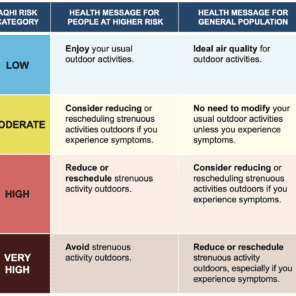
Wildfire and residential smoke risk communication

Government authorities faced recurring challenges in communicating health risks from smoke caused by both wildfires and residential burning. While these events were becoming more frequent and more severe, the public health messages often failed to resonate with affected communities or...
Read More about Wildfire and residential smoke risk communication

Pickering Nuclear Facility Re‑licensing

The client sought support to finalize a Commission Member Document (CMD) for the re‑licensing of a nuclear facility. Recognizing the complexity and sensitivity of reactor re‑licensing, they requested assistance in crafting communication materials that were both technically comprehensive and accessible...
Read More about Pickering Nuclear Facility Re‑licensing

Building an international alliance and campaign

UN-Habitat sought to establish a new global platform to bring coherence to international dialogue on sustainable urbanization. At the outset, this initiative had no name, no identity, and no governing structure, only the recognition that cities faced pressing challenges requiring...
Read More about Building an international alliance and campaign

Drinking Water Guidelines for Manganese

Establishing science-based drinking water guidelines for manganese requires integrating diverse regulatory approaches, emerging modeling tools, and evolving toxicological evidence. The client commissioned this project to systematically assess existing manganese drinking water guidelines and the scientific foundations upon which they are...
Read More about Drinking Water Guidelines for Manganese

Characterizing uncertainty in MAF values estimated using the KEMI MAF

The client sought to improve understanding of uncertainties surrounding the application of mixture assessment factors (MAFs) for aquatic receptors, specifically those estimated using the KEMI methodology. While the KEMI MAF approach is considered technically robust, its assumptions—particularly about chemical-specific controls,...
Read More about Characterizing uncertainty in MAF values estimated using the KEMI MAF

Development of a National Food Safety Information System and Risk Assessment Capacity in Vietnam

Authorities in Vietnam sought targeted expertise to strengthen the country’s ability to detect, assess, and respond to food safety threats. This initiative had two linked objectives: building a comprehensive, transparent, and reliable national food safety information system, and enhancing risk...
Read More about Development of a National Food Safety Information System and Risk Assessment Capacity in Vietnam

Risk-based decision making framework

The Alliance of Blood Operators (ABO) sought to move its members toward a consistent, transparent approach to risk-based decision-making. Having worked through the development of a framework, the organization now wanted formal adoption, external validation, and practical application to real-world...
Read More about Risk-based decision making framework