A Risk Sciences International Case Study

Risk-Based Decision-Making (RBDM) Support for Plasma Supply / Sufficiency

Plasma

Client: Canadian Blood Services

Listing of the client in no way affirms the client's support, sponsorship, or validation in any form of Risk Sciences International or the RSI staff member(s) who conducted this project during their stay with RSI or prior to joining the company. This case study is displayed for informative purposes only to demonstrate the capacity of RSI staff members. This case study reveals no proprietary information or information deemed sensitive.

Project description:

Risk-Based Decision-Making (RBDM) Support for Plasma Sufficiency

Facing renewed challenges in securing a reliable domestic plasma supply, Canadian Blood Services sought support to apply a Risk-Based Decision-Making (RBDM) framework. The objective was to assess the value and implications of expanding domestic plasma collection and processing capacity in response to the emergence of commercial plasma operations that export plasma to international markets.

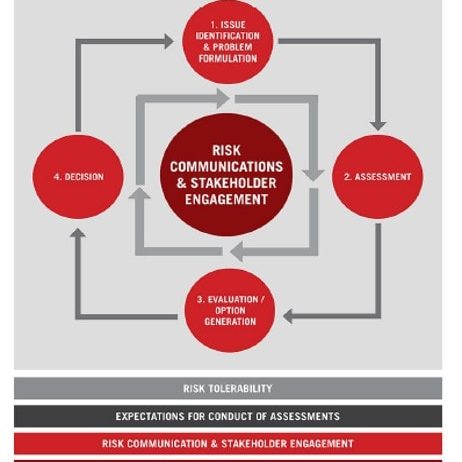
The work focused on guiding the client through multiple phases of the RBDM process, including early-stage preparation and problem formulation, through to the evaluation and decision-making stages. Specific tasks included characterizing the issue, identifying decision drivers, framing assessment questions, and outlining potential risk management options. RSI provided modeling support, updated and developed new risk scenarios, and contributed to the evaluation of trade-offs associated with different strategies.

The engagement also entailed compiling a comprehensive report that documented each step of the RBDM process—covering assessment types such as security of supply, health economics, operational risk, and contextual considerations. The final output included a well-structured summary of findings and recommendations, along with the design and layout of the final report, developed in alignment with the client’s branding guidelines.

This work enabled the client to evaluate risk-informed options and make evidence-based decisions aimed at ensuring an adequate, secure, and sustainable plasma supply for Canadian patients.

Start: 2019

End: 2019

Experts related to this case study

Greg Paoli

CEO, Principal Risk Scientist

Greg Paoli is the CEO and Principal Risk Scientist at Risk Sciences International (RSI), a firm he co-founded in 2006 following the integration of his earlier consultancy, Decisionalysis Risk Consultants, with the consulting activities of the McLaughlin Centre for Population...
Read More about Greg Paoli

Cemil ‘Jim’ Alyanak

Vice-President Communications and Strategic Initiatives

Cemil ‘Jim’ Alyanak joined Risk Sciences International (RSI) in 2018 and serves as Vice-President, Communications and Strategic Initiatives. In this senior leadership role, he leads RSI’s risk communications practice, drives cross-cutting initiatives, advances strategic in-house projects, and expands the company’s...
Read More about Cemil ‘Jim’ Alyanak

More RSI Case Studies

RSI presents a very small selection of case studies to highlight some of its key work.

Technical Support for Risk-Based Decision Making (RBDM)

To enhance the oversight of cannabis production under its regulatory mandate, the Cannabis Directorate sought expert support in developing a risk-based decision-making framework tailored to its compliance and enforcement responsibilities. The directorate aimed to better assess and respond to non-conformance...
Read More about Technical Support for Risk-Based Decision Making (RBDM)

Measuring impact of zoonotic animal diseases in Canada

The Canadian Food Inspection Agency sought RSI’s support in exploring how human health impacts from zoonotic diseases could be compared consistently with other public health risks. Traditionally, animal disease control decisions relied on veterinary and economic measures, but there was...
Read More about Measuring impact of zoonotic animal diseases in Canada

Methodology for Developing Risk Significance Insights

The project centered on supporting the development of a methodology that could eventually be implemented as an Artificial Intelligence (AI) or Machine Learning (ML) process. The objective was to help formalize and potentially automate how professional judgment is applied when...
Read More about Methodology for Developing Risk Significance Insights

Contraceptive recall review

Health Canada requested an external review following significant public criticism of its handling of a pharmaceutical recall. The case involved a contraceptive drug that was withdrawn due to packaging errors, and the department faced questions about whether it had acted...
Read More about Contraceptive recall review

Communication material on lithium in drinking water and health risks

To support public communication around emerging drinking water concerns, RSI was engaged to develop accessible, scientifically grounded materials on lithium exposure and its potential health effects. The work focused on equipping stakeholders with clear, credible information that could inform both...
Read More about Communication material on lithium in drinking water and health risks

Development of a National Food Safety Information System and Risk Assessment Capacity in Vietnam

Authorities in Vietnam sought targeted expertise to strengthen the country’s ability to detect, assess, and respond to food safety threats. This initiative had two linked objectives: building a comprehensive, transparent, and reliable national food safety information system, and enhancing risk...
Read More about Development of a National Food Safety Information System and Risk Assessment Capacity in Vietnam

Building an international alliance and campaign

UN-Habitat sought to establish a new global platform to bring coherence to international dialogue on sustainable urbanization. At the outset, this initiative had no name, no identity, and no governing structure, only the recognition that cities faced pressing challenges requiring...
Read More about Building an international alliance and campaign

Validation and Optimization of the Computational Tool for the Microbial Risk Assessment Framework (MRAF)

To support more consistent and quantitative assessments of new micro-organisms under the Canadian Environmental Protection Act, Health Canada's New Substances Program (NSP) sought to refine the tools and processes within its Microbial Risk Assessment Framework (MRAF). The NSP had previously...
Read More about Validation and Optimization of the Computational Tool for the Microbial Risk Assessment Framework (MRAF)

External Peer Consultation of the Inorganic – Late Biomonitoring Approach Draft Screening Assessment Report

To support the Chemicals Management Plan under the Canadian Environmental Protection Act (CEPA), Health Canada sought expert peer consultation for a draft screening assessment report (DSAR) evaluating 47 inorganic substances identified as priorities. The client required independent scientific and technical...
Read More about External Peer Consultation of the Inorganic – Late Biomonitoring Approach Draft Screening Assessment Report

Expansion of the Stochastic Health Canada Quantitative Microbial Risk Assessment Tool

Health Canada sought to enhance its Quantitative Microbial Risk Assessment (QMRA) tool, originally developed over 15 years ago for stakeholders responsible for drinking water systems. With advancements in probabilistic modeling and microbial risk assessment, the client required updates to reflect...
Read More about Expansion of the Stochastic Health Canada Quantitative Microbial Risk Assessment Tool

Developing a Risk-Based Compliance Framework for Digital Service Delivery

The Financial Consumer Agency of Canada (FCAC) engaged Risk Sciences International to provide strategic advisory services aimed at enhancing its regulatory compliance model through risk-based methodologies. FCAC’s objective was to explore new approaches that would integrate digital tools and data-driven...
Read More about Developing a Risk-Based Compliance Framework for Digital Service Delivery

Evaluation of Toxicological Data on Experior

To support the evaluation of a new veterinary pharmaceutical product intended for use in bovines, a scientific review was requested of submitted toxicological data related to the active compound LY488756. This compound, proposed under the product name Experior, had been...
Read More about Evaluation of Toxicological Data on Experior

Evaluation of Drug Recall Communication and Risk Determination Processes

In response to public and ministerial concerns about the timeliness and adequacy of information shared during a major prescription drug recall, Health Canada commissioned an independent review to assess its response to the event. The situation involved a recall of...
Read More about Evaluation of Drug Recall Communication and Risk Determination Processes

Food safety risk analysis tools

The World Health Organization and the Food and Agriculture Organization of the United Nations asked RSI to develop a suite of online tools to support food regulators and the food industry in applying risk-based approaches to food safety. These organizations...
Read More about Food safety risk analysis tools

Environmental Health Factors, Chronic Diseases, and Pandemic Resilience

To support more effective health policy and pandemic preparedness, this project examined how environmental health factors intersect with chronic disease and influence pandemic resilience. The client sought evidence to clarify how exposures to contaminants in air, water, and soil contribute...
Read More about Environmental Health Factors, Chronic Diseases, and Pandemic Resilience

Update of WHO Guidance on Food Defense

To support international efforts in mitigating deliberate threats to the food system, the World Health Organization commissioned an update to its earlier guidance titled Terrorist Threats to Food. The revision aimed to broaden the original scope by addressing not only...
Read More about Update of WHO Guidance on Food Defense

Risk-based decision making framework

The Alliance of Blood Operators (ABO) sought to move its members toward a consistent, transparent approach to risk-based decision-making. Having worked through the development of a framework, the organization now wanted formal adoption, external validation, and practical application to real-world...
Read More about Risk-based decision making framework