A Risk Sciences International Case Study

Measuring impact of zoonotic animal diseases in Canada

RSI was involved with the study of the impact of zoonotic animal diseases in Canada.

Client: Canadian Food Inspection Agency (CFIA)

Listing of the client in no way affirms the client's support, sponsorship, or validation in any form of Risk Sciences International or the RSI staff member(s) who conducted this project during their stay with RSI or prior to joining the company. This case study is displayed for informative purposes only to demonstrate the capacity of RSI staff members. This case study reveals no proprietary information or information deemed sensitive.

Project description:

Measuring impact of zoonotic animal diseases in Canada

The Canadian Food Inspection Agency sought RSI’s support in exploring how human health impacts from zoonotic diseases could be compared consistently with other public health risks. Traditionally, animal disease control decisions relied on veterinary and economic measures, but there was no standard way to capture and compare the burden of zoonoses on human health. The CFIA wanted an approach that would allow it to weigh different animal health interventions against other public health priorities in a way that was scientifically robust and comparable across hazards.

RSI conducted case studies on a range of zoonotic diseases, including avian influenza, bovine spongiform encephalopathy, bovine tuberculosis, brucellosis, psittacosis, Q fever, Rift Valley fever, and others. For each, data were compiled and modeled using stochastic calculations with @Risk software, with bootstrapped iterations to quantify uncertainty. Human health impacts were expressed in disability adjusted life years (DALYs), an established metric used by the World Health Organization and others to capture both morbidity and mortality in a single measure. This allowed the CFIA to see the relative health burden of animal diseases compared not only to each other but also to other human health risks outside the veterinary domain.

The purpose of this project was to provide the CFIA with a decision-support basis for prioritizing interventions across a wide range of zoonotic hazards. By translating animal health risks into DALYs, the agency gained a tool for consistent cross-comparison, enabling more balanced and defensible risk management choices and more transparent communication of risk trade-offs to stakeholders.

Experts related to this case study

Greg Paoli

CEO, Principal Risk Scientist

Greg Paoli is the CEO and Principal Risk Scientist at Risk Sciences International (RSI), a firm he co-founded in 2006 following the integration of his earlier consultancy, Decisionalysis Risk Consultants, with the consulting activities of the McLaughlin Centre for Population...
Read More about Greg Paoli

Emma Hartnett

Vice-President Risk Modelling and Simulation

Dr. Emma Hartnett is Vice-President, Risk Modelling and Simulation at Risk Sciences International (RSI), where she has been a foundational member since its inception in 2006. A globally recognized authority in quantitative risk assessment (QRA), she specializes in developing risk...
Read More about Emma Hartnett

Michael G. Tyshenko

Senior Health Risk Analyst

Dr. Michael G. Tyshenko is a Senior Health Risk Analyst at Risk Sciences International (RSI), where he has contributed since 2018 to some of the organization’s most complex and cross-cutting public health risk projects. As RSI’s lead on chemical peer...
Read More about Michael G. Tyshenko

More RSI Case Studies

RSI presents a very small selection of case studies to highlight some of its key work.
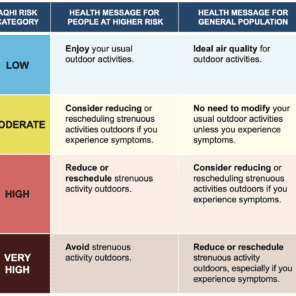
Wildfire and residential smoke risk communication

Government authorities faced recurring challenges in communicating health risks from smoke caused by both wildfires and residential burning. While these events were becoming more frequent and more severe, the public health messages often failed to resonate with affected communities or...
Read More about Wildfire and residential smoke risk communication

Update of WHO Guidance on Food Defense

To support international efforts in mitigating deliberate threats to the food system, the World Health Organization commissioned an update to its earlier guidance titled Terrorist Threats to Food. The revision aimed to broaden the original scope by addressing not only...
Read More about Update of WHO Guidance on Food Defense

Age-Related Cognitive Decline: Systematic Review and Meta-Analysis

The College of Physicians & Surgeons of Alberta (CPSA) commissioned a systematic review and meta-analysis to support evidence-informed decision-making around age-related cognitive decline among practicing physicians. The initiative was led by CPSA’s Physician Health Monitoring Program (PHMP), which sought to...
Read More about Age-Related Cognitive Decline: Systematic Review and Meta-Analysis

Finalization of Risk Assessment on Secure Opioid Dispensing Devices

To support decision-making around modifications to opioid agonist treatment delivery, a detailed risk assessment was requested to evaluate the integration of secure dispensing devices for direct patient access to hydromorphone. Building on a previously conducted preliminary assessment, the work required...
Read More about Finalization of Risk Assessment on Secure Opioid Dispensing Devices

Validation and Optimization of the Computational Tool for the Microbial Risk Assessment Framework (MRAF)

To support more consistent and quantitative assessments of new micro-organisms under the Canadian Environmental Protection Act, Health Canada's New Substances Program (NSP) sought to refine the tools and processes within its Microbial Risk Assessment Framework (MRAF). The NSP had previously...
Read More about Validation and Optimization of the Computational Tool for the Microbial Risk Assessment Framework (MRAF)

Food safety risk analysis tools

The World Health Organization and the Food and Agriculture Organization of the United Nations asked RSI to develop a suite of online tools to support food regulators and the food industry in applying risk-based approaches to food safety. These organizations...
Read More about Food safety risk analysis tools

Pickering Nuclear Facility Re‑licensing

The client sought support to finalize a Commission Member Document (CMD) for the re‑licensing of a nuclear facility. Recognizing the complexity and sensitivity of reactor re‑licensing, they requested assistance in crafting communication materials that were both technically comprehensive and accessible...
Read More about Pickering Nuclear Facility Re‑licensing

Risk-Based Decision Making (RBDM) Compliance and Enforcement

Innovation, Science and Economic Development Canada (ISED), through its Spectrum Management Innovation Directorate, sought support in applying risk-based decision making (RBDM) across its compliance and enforcement responsibilities. The department was looking for a structured and data-driven approach to prioritize regulatory...
Read More about Risk-Based Decision Making (RBDM) Compliance and Enforcement

Assessing the Impact of Interstudy Variation in LOAELs on Findings of Low-Dose Additivity in In Vivo Studies of Mixtures

Demonstrating the safe use of chemical mixtures remains a critical challenge in toxicological science. In recent years, studies have suggested that chemicals can exhibit dose additivity—causing a combined effect—even when each chemical individually is below its effect threshold. This project...
Read More about Assessing the Impact of Interstudy Variation in LOAELs on Findings of Low-Dose Additivity in In Vivo Studies of Mixtures

Development of a National Food Safety Information System and Risk Assessment Capacity in Vietnam

Authorities in Vietnam sought targeted expertise to strengthen the country’s ability to detect, assess, and respond to food safety threats. This initiative had two linked objectives: building a comprehensive, transparent, and reliable national food safety information system, and enhancing risk...
Read More about Development of a National Food Safety Information System and Risk Assessment Capacity in Vietnam

Evaluation of Drug Recall Communication and Risk Determination Processes

In response to public and ministerial concerns about the timeliness and adequacy of information shared during a major prescription drug recall, Health Canada commissioned an independent review to assess its response to the event. The situation involved a recall of...
Read More about Evaluation of Drug Recall Communication and Risk Determination Processes

Institutional & communications assessment

In the mid-1990s the International Organization for Migration (IOM) faced one of the most pivotal moments in its history. Though it counted 76 member states, it remained outside the United Nations system, and its work was increasingly perceived to overlap...
Read More about Institutional & communications assessment

Marine Planning and Conservation National Ecological Risk Guidance: Risk Communication Expertise

To support the refinement and implementation of its ecological risk guidance, a federal department responsible for marine conservation engaged expert assistance in risk communication. The primary objective was to ensure that the national guidance for ecological risk assessment—developed as part...
Read More about Marine Planning and Conservation National Ecological Risk Guidance: Risk Communication Expertise

Systematic Review of Artificial Sweeteners and Health Risks

A comprehensive systematic review was undertaken to assess experimental evidence regarding the potential health risks associated with artificial sweeteners, specifically focusing on cancer and pre-term delivery. The client sought a rigorous analysis of both in vivo and in vitro experimental...
Read More about Systematic Review of Artificial Sweeteners and Health Risks

Building an international alliance and campaign

UN-Habitat sought to establish a new global platform to bring coherence to international dialogue on sustainable urbanization. At the outset, this initiative had no name, no identity, and no governing structure, only the recognition that cities faced pressing challenges requiring...
Read More about Building an international alliance and campaign

Expansion of the Stochastic Health Canada Quantitative Microbial Risk Assessment Tool

Health Canada sought to enhance its Quantitative Microbial Risk Assessment (QMRA) tool, originally developed over 15 years ago for stakeholders responsible for drinking water systems. With advancements in probabilistic modeling and microbial risk assessment, the client required updates to reflect...
Read More about Expansion of the Stochastic Health Canada Quantitative Microbial Risk Assessment Tool

Risk-Based Optimization of Enforcement Activities

A federal agency required scientific support to enhance the effectiveness of its environmental enforcement activities. This involved identifying and analyzing the risk factors—both environmental and human health-related—that contribute to the likelihood and impact of regulatory offences. The objective was to...
Read More about Risk-Based Optimization of Enforcement Activities

Communication material on lithium in drinking water and health risks

To support public communication around emerging drinking water concerns, RSI was engaged to develop accessible, scientifically grounded materials on lithium exposure and its potential health effects. The work focused on equipping stakeholders with clear, credible information that could inform both...
Read More about Communication material on lithium in drinking water and health risks