A Risk Sciences International Case Study

Developing a Risk-Based Compliance Framework for Digital Service Delivery

Consumer data and protection

Client: Financial Consumer Agency of Canada (FCAC)

Listing of the client in no way affirms the client's support, sponsorship, or validation in any form of Risk Sciences International or the RSI staff member(s) who conducted this project during their stay with RSI or prior to joining the company. This case study is displayed for informative purposes only to demonstrate the capacity of RSI staff members. This case study reveals no proprietary information or information deemed sensitive.

Project description:

Developing a Risk-Based Compliance Framework for Digital Service Delivery

The Financial Consumer Agency of Canada (FCAC) engaged Risk Sciences International to provide strategic advisory services aimed at enhancing its regulatory compliance model through risk-based methodologies. FCAC’s objective was to explore new approaches that would integrate digital tools and data-driven strategies into its compliance activities, in line with its strategic goal of strengthening consumer protection in financial markets.

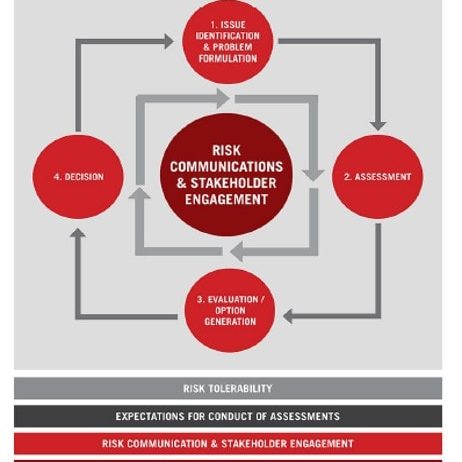
The work focused on designing strategies and frameworks to assess current practices, identify gaps, and propose forward-looking options. The project included a discovery phase with a review of internal documentation and relevant international guidance, followed by qualitative consultations with FCAC staff to gather insights on existing processes and challenges. A comparative analysis phase examined FCAC’s current compliance operations against best practices and stakeholder feedback to develop practical options for a risk assessment framework and a risk outlook tool.

Deliverables included a comprehensive final report outlining the current state of compliance operations, proposed frameworks for risk-based compliance, and a roadmap for implementation. The recommendations were crafted to support FCAC in allocating resources more effectively, improving non-compliance detection, and enhancing the agency’s digital service delivery capabilities.

Start: 2023

End: 2023

Experts related to this case study

Andrew Maw

Senior Analyst

Andrew’s focus since retiring from the Canadian federal public service has been to help clients improve digital service delivery by maximizing the use of their data holdings and assisting government regulators in adopting risk-based compliance models derived from data on...
Read More about Andrew Maw

More RSI Case Studies

RSI presents a very small selection of case studies to highlight some of its key work.

Methodology for Developing Risk Significance Insights

The project centered on supporting the development of a methodology that could eventually be implemented as an Artificial Intelligence (AI) or Machine Learning (ML) process. The objective was to help formalize and potentially automate how professional judgment is applied when...
Read More about Methodology for Developing Risk Significance Insights

International newspaper rethink

The International Herald Tribune (IHT) sought guidance at a time of profound change in the media landscape. With the World Wide Web emerging and competition intensifying from global and regional editions of established outlets such as The Economist, The Wall...
Read More about International newspaper rethink

Analysis in Support of Risk-Based Decision-Making for the Alberta Safety Codes Council

An independent regulatory organization responsible for oversight of Alberta’s safety codes system sought to strengthen its capacity for risk-based decision-making. The organization aimed to ensure that regulatory actions—particularly in the area of petroleum storage tanks—were guided by clear, evidence-based prioritization...
Read More about Analysis in Support of Risk-Based Decision-Making for the Alberta Safety Codes Council

Risk-Based Optimization of Enforcement Activities

A federal agency required scientific support to enhance the effectiveness of its environmental enforcement activities. This involved identifying and analyzing the risk factors—both environmental and human health-related—that contribute to the likelihood and impact of regulatory offences. The objective was to...
Read More about Risk-Based Optimization of Enforcement Activities

Measuring impact of zoonotic animal diseases in Canada

The Canadian Food Inspection Agency sought RSI’s support in exploring how human health impacts from zoonotic diseases could be compared consistently with other public health risks. Traditionally, animal disease control decisions relied on veterinary and economic measures, but there was...
Read More about Measuring impact of zoonotic animal diseases in Canada

Applying New Assessment Methods (NAMs) for Assessing Semi-Volatile Organic Compounds (SVOCs) in Indoor Residential Environments

Health Canada sought expert support in advancing its efforts to develop screening values for semi-volatile organic compounds (SVOCs) commonly found in residential indoor environments. Previous work on indoor air contaminants had focused on volatile organic compounds (VOCs), where screening values...
Read More about Applying New Assessment Methods (NAMs) for Assessing Semi-Volatile Organic Compounds (SVOCs) in Indoor Residential Environments

Drinking Water Guidelines for Manganese

Establishing science-based drinking water guidelines for manganese requires integrating diverse regulatory approaches, emerging modeling tools, and evolving toxicological evidence. The client commissioned this project to systematically assess existing manganese drinking water guidelines and the scientific foundations upon which they are...
Read More about Drinking Water Guidelines for Manganese

Risk Model Framework for Foodborne Campylobacteriosis via Poultry Meat Pathway

To support national public health goals, RSI was tasked with developing a quantitative microbiological risk assessment (QMRA) model to estimate the human health risks associated with the consumption of chicken in New Zealand. The core objective was to quantify the...
Read More about Risk Model Framework for Foodborne Campylobacteriosis via Poultry Meat Pathway

Airport traffic flow and signage review

An international airport authority sought a comprehensive assessment of passenger and vehicle traffic flow after receiving complaints of confusion and safety concerns. Reports indicated that passengers were struggling to interpret signage, often stopping too long to process graphics, which caused...
Read More about Airport traffic flow and signage review

Food safety risk analysis tools

The World Health Organization and the Food and Agriculture Organization of the United Nations asked RSI to develop a suite of online tools to support food regulators and the food industry in applying risk-based approaches to food safety. These organizations...
Read More about Food safety risk analysis tools

Risk Communication on McIntyre Powder

In response to increasing public concern about the historical use of McIntyre Powder—an aluminum-based substance once administered to miners in Ontario to prevent silicosis—the client sought expert guidance on managing risk communication related to potential health implications. Widespread media coverage...
Read More about Risk Communication on McIntyre Powder

Risk-based decision making framework

The Alliance of Blood Operators (ABO) sought to move its members toward a consistent, transparent approach to risk-based decision-making. Having worked through the development of a framework, the organization now wanted formal adoption, external validation, and practical application to real-world...
Read More about Risk-based decision making framework

Building an international alliance and campaign

UN-Habitat sought to establish a new global platform to bring coherence to international dialogue on sustainable urbanization. At the outset, this initiative had no name, no identity, and no governing structure, only the recognition that cities faced pressing challenges requiring...
Read More about Building an international alliance and campaign

Systematic Review of Artificial Sweeteners and Health Risks

A comprehensive systematic review was undertaken to assess experimental evidence regarding the potential health risks associated with artificial sweeteners, specifically focusing on cancer and pre-term delivery. The client sought a rigorous analysis of both in vivo and in vitro experimental...
Read More about Systematic Review of Artificial Sweeteners and Health Risks

Risk-Based Decision-Making (RBDM) Support for Plasma Supply / Sufficiency

Facing renewed challenges in securing a reliable domestic plasma supply, Canadian Blood Services sought support to apply a Risk-Based Decision-Making (RBDM) framework. The objective was to assess the value and implications of expanding domestic plasma collection and processing capacity in...
Read More about Risk-Based Decision-Making (RBDM) Support for Plasma Supply / Sufficiency

Age-Related Cognitive Decline: Systematic Review and Meta-Analysis

The College of Physicians & Surgeons of Alberta (CPSA) commissioned a systematic review and meta-analysis to support evidence-informed decision-making around age-related cognitive decline among practicing physicians. The initiative was led by CPSA’s Physician Health Monitoring Program (PHMP), which sought to...
Read More about Age-Related Cognitive Decline: Systematic Review and Meta-Analysis

Assessing the Impact of Interstudy Variation in LOAELs on Findings of Low-Dose Additivity in In Vivo Studies of Mixtures

Demonstrating the safe use of chemical mixtures remains a critical challenge in toxicological science. In recent years, studies have suggested that chemicals can exhibit dose additivity—causing a combined effect—even when each chemical individually is below its effect threshold. This project...
Read More about Assessing the Impact of Interstudy Variation in LOAELs on Findings of Low-Dose Additivity in In Vivo Studies of Mixtures

Contraceptive recall review

Health Canada requested an external review following significant public criticism of its handling of a pharmaceutical recall. The case involved a contraceptive drug that was withdrawn due to packaging errors, and the department faced questions about whether it had acted...
Read More about Contraceptive recall review