A Risk Sciences International Case Study

Marine Planning and Conservation National Ecological Risk Guidance: Risk Communication Expertise

Ocean floor

Client: Fisheries and Oceans Canada

Listing of the client in no way affirms the client's support, sponsorship, or validation in any form of Risk Sciences International or the RSI staff member(s) who conducted this project during their stay with RSI or prior to joining the company. This case study is displayed for informative purposes only to demonstrate the capacity of RSI staff members. This case study reveals no proprietary information or information deemed sensitive.

Project description:

Marine Planning and Conservation National Ecological Risk Guidance: Risk Communication Expertise

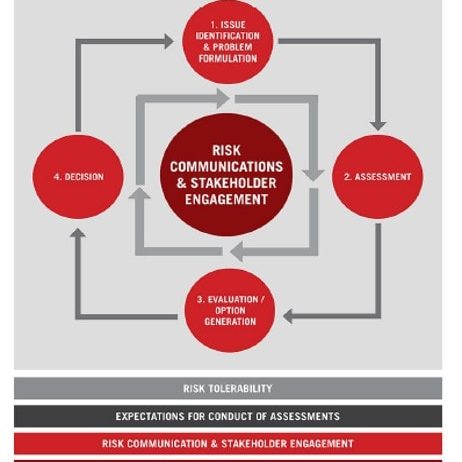
To support the refinement and implementation of its ecological risk guidance, a federal department responsible for marine conservation engaged expert assistance in risk communication. The primary objective was to ensure that the national guidance for ecological risk assessment—developed as part of the department’s marine spatial planning and marine protected areas initiatives—could be effectively communicated to diverse internal and external audiences.

RSI was engaged to fulfill two key roles: developing risk communication content tailored to three principal audiences (technical and decision-making internal groups, external partners and stakeholders, and the general public), and leading training sessions for internal practitioners. This work included attending a series of technical virtual meetings, offering insights on communication strategies, and contributing to the clarity and usability of internal documents and public-facing materials.

Activities involved reviewing and drafting sections of the guidance related to communication, consultation, and reporting, developing summaries for decision-makers, and proposing content for a public reporting template. RSI also led a dedicated risk communication session, which included training and facilitated discussion on best practices for conveying complex risk processes. Recommendations were grounded in interviews with internal practitioners, aiming to address communication challenges and improve transparency across audiences.

The overarching goal was to strengthen the clarity, consistency, and accessibility of the department’s risk guidance framework to enhance internal consensus and public understanding, ultimately supporting more effective marine planning and conservation efforts nationwide.

Start: 2021

End: 2021

Experts related to this case study

Greg Paoli

CEO, Principal Risk Scientist

Greg Paoli is the CEO and Principal Risk Scientist at Risk Sciences International (RSI), a firm he co-founded in 2006 following the integration of his earlier consultancy, Decisionalysis Risk Consultants, with the consulting activities of the McLaughlin Centre for Population...
Read More about Greg Paoli

Anne Wiles

Senior Analyst

Dr. Anne Wiles joined Risk Sciences International (RSI) in 2008, where she currently serves as a Senior Analyst specializing in risk communication, perception, and governance. With a distinctive blend of expertise in language, regulation, and the use of science in...
Read More about Anne Wiles

More RSI Case Studies

RSI presents a very small selection of case studies to highlight some of its key work.

Characterizing uncertainty in MAF values estimated using the KEMI MAF

The client sought to improve understanding of uncertainties surrounding the application of mixture assessment factors (MAFs) for aquatic receptors, specifically those estimated using the KEMI methodology. While the KEMI MAF approach is considered technically robust, its assumptions—particularly about chemical-specific controls,...
Read More about Characterizing uncertainty in MAF values estimated using the KEMI MAF

Food Inspection Scientific Analysis & Risk Modelling

In support of ongoing efforts to modernize Canada's food inspection system, a request was issued for scientific and analytical expertise to enhance two critical risk-based decision tools: the Establishment-based Risk Assessment (ERA) and Importer Risk Assessment (IRA) models. These models...
Read More about Food Inspection Scientific Analysis & Risk Modelling

Risk-based decision making framework

The Alliance of Blood Operators (ABO) sought to move its members toward a consistent, transparent approach to risk-based decision-making. Having worked through the development of a framework, the organization now wanted formal adoption, external validation, and practical application to real-world...
Read More about Risk-based decision making framework

Risk-Based Decision-Making (RBDM) Support for Plasma Supply / Sufficiency

Facing renewed challenges in securing a reliable domestic plasma supply, Canadian Blood Services sought support to apply a Risk-Based Decision-Making (RBDM) framework. The objective was to assess the value and implications of expanding domestic plasma collection and processing capacity in...
Read More about Risk-Based Decision-Making (RBDM) Support for Plasma Supply / Sufficiency

Food safety risk analysis tools

The World Health Organization and the Food and Agriculture Organization of the United Nations asked RSI to develop a suite of online tools to support food regulators and the food industry in applying risk-based approaches to food safety. These organizations...
Read More about Food safety risk analysis tools

Pickering Nuclear Facility Re‑licensing

The client sought support to finalize a Commission Member Document (CMD) for the re‑licensing of a nuclear facility. Recognizing the complexity and sensitivity of reactor re‑licensing, they requested assistance in crafting communication materials that were both technically comprehensive and accessible...
Read More about Pickering Nuclear Facility Re‑licensing