A Risk Sciences International Case Study

Analysis in Support of Risk-Based Decision-Making for the Alberta Safety Codes Council

Alberty safety

Client: Alberta Safety Codes Council

Listing of the client in no way affirms the client's support, sponsorship, or validation in any form of Risk Sciences International or the RSI staff member(s) who conducted this project during their stay with RSI or prior to joining the company. This case study is displayed for informative purposes only to demonstrate the capacity of RSI staff members. This case study reveals no proprietary information or information deemed sensitive.

Project description:

Analysis in Support of Risk-Based Decision-Making for the Alberta Safety Codes Council

An independent regulatory organization responsible for oversight of Alberta’s safety codes system sought to strengthen its capacity for risk-based decision-making. The organization aimed to ensure that regulatory actions—particularly in the area of petroleum storage tanks—were guided by clear, evidence-based prioritization methods that protect public safety while making effective use of resources.

The project began with the development of a shared public risk lexicon and detailed taxonomies for hazards, harms, and risk controls specific to petroleum storage tanks. This foundational step ensured consistency in terminology and understanding across the organization. The scope also included preliminary work on taxonomies for other safety code disciplines, enabling future expansion of the framework.

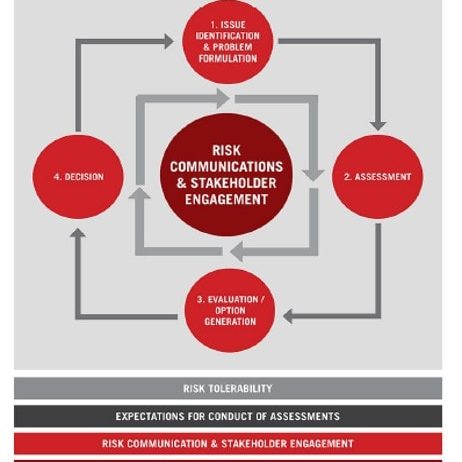
Next, the work focused on creating a practical risk measurement and prioritization tool. Using available inventory data, inspection procedures, and non-compliance trends, several scoring methods were developed to rank storage tanks by relative risk. The chosen near-term method was implemented in a prototype tool built in MS Excel, producing risk categories (low, medium, high) to inform inspection priorities. Documentation and example outputs were prepared to support operational use.

To align risk-based practices with organizational goals, a series of executive-level mini-workshops were designed and facilitated. These sessions used concise policy briefs to explore the advantages, challenges, and implementation pathways for key elements of a risk-based decision-making framework. Outcomes from these discussions were summarized and presented to the Board of Directors, supporting informed strategic decisions on the framework’s adoption and growth.

Start: 2020

End: 2020

Experts related to this case study

Greg Paoli

CEO, Principal Risk Scientist

Greg Paoli is the CEO and Principal Risk Scientist at Risk Sciences International (RSI), a firm he co-founded in 2006 following the integration of his earlier consultancy, Decisionalysis Risk Consultants, with the consulting activities of the McLaughlin Centre for Population...
Read More about Greg Paoli

More RSI Case Studies

RSI presents a very small selection of case studies to highlight some of its key work.

Marine Planning and Conservation National Ecological Risk Guidance: Risk Communication Expertise

To support the refinement and implementation of its ecological risk guidance, a federal department responsible for marine conservation engaged expert assistance in risk communication. The primary objective was to ensure that the national guidance for ecological risk assessment—developed as part...
Read More about Marine Planning and Conservation National Ecological Risk Guidance: Risk Communication Expertise

External Peer Review of the Draft Screening Assessment Report on Selected C3-C5 Alcohols

To support the quality and defensibility of regulatory decision-making under the Canadian Environmental Protection Act, 1999 (CEPA), Health Canada engaged Risk Sciences International to coordinate an independent external peer review of the Draft Screening Assessment Report (DSAR) for Selected C3-C5...
Read More about External Peer Review of the Draft Screening Assessment Report on Selected C3-C5 Alcohols

Methodology for Developing Risk Significance Insights

The project centered on supporting the development of a methodology that could eventually be implemented as an Artificial Intelligence (AI) or Machine Learning (ML) process. The objective was to help formalize and potentially automate how professional judgment is applied when...
Read More about Methodology for Developing Risk Significance Insights

Evaluation of Toxicological Data on Experior

To support the evaluation of a new veterinary pharmaceutical product intended for use in bovines, a scientific review was requested of submitted toxicological data related to the active compound LY488756. This compound, proposed under the product name Experior, had been...
Read More about Evaluation of Toxicological Data on Experior

Risk-Based Optimization of Enforcement Activities

A federal agency required scientific support to enhance the effectiveness of its environmental enforcement activities. This involved identifying and analyzing the risk factors—both environmental and human health-related—that contribute to the likelihood and impact of regulatory offences. The objective was to...
Read More about Risk-Based Optimization of Enforcement Activities

Assessing the Impact of Interstudy Variation in LOAELs on Findings of Low-Dose Additivity in In Vivo Studies of Mixtures

Demonstrating the safe use of chemical mixtures remains a critical challenge in toxicological science. In recent years, studies have suggested that chemicals can exhibit dose additivity—causing a combined effect—even when each chemical individually is below its effect threshold. This project...
Read More about Assessing the Impact of Interstudy Variation in LOAELs on Findings of Low-Dose Additivity in In Vivo Studies of Mixtures

Pickering Nuclear Facility Re‑licensing

The client sought support to finalize a Commission Member Document (CMD) for the re‑licensing of a nuclear facility. Recognizing the complexity and sensitivity of reactor re‑licensing, they requested assistance in crafting communication materials that were both technically comprehensive and accessible...
Read More about Pickering Nuclear Facility Re‑licensing

Measuring impact of zoonotic animal diseases in Canada

The Canadian Food Inspection Agency sought RSI’s support in exploring how human health impacts from zoonotic diseases could be compared consistently with other public health risks. Traditionally, animal disease control decisions relied on veterinary and economic measures, but there was...
Read More about Measuring impact of zoonotic animal diseases in Canada

Risk Assessment of the Impact of Lethality Standards on Salmonellosis from Ready-to-Eat (RTE) Meat and Poultry Products

To support regulatory decision-making, a comprehensive risk assessment was conducted to evaluate how varying lethality performance standards would impact the public health burden of salmonellosis associated with Ready-to-Eat (RTE) meat and poultry products. The primary objective was to quantify the...
Read More about Risk Assessment of the Impact of Lethality Standards on Salmonellosis from Ready-to-Eat (RTE) Meat and Poultry Products

Institutional & communications assessment

In the mid-1990s the International Organization for Migration (IOM) faced one of the most pivotal moments in its history. Though it counted 76 member states, it remained outside the United Nations system, and its work was increasingly perceived to overlap...
Read More about Institutional & communications assessment

Development of a National Food Safety Information System and Risk Assessment Capacity in Vietnam

Authorities in Vietnam sought targeted expertise to strengthen the country’s ability to detect, assess, and respond to food safety threats. This initiative had two linked objectives: building a comprehensive, transparent, and reliable national food safety information system, and enhancing risk...
Read More about Development of a National Food Safety Information System and Risk Assessment Capacity in Vietnam

Validation and Optimization of the Computational Tool for the Microbial Risk Assessment Framework (MRAF)

To support more consistent and quantitative assessments of new micro-organisms under the Canadian Environmental Protection Act, Health Canada's New Substances Program (NSP) sought to refine the tools and processes within its Microbial Risk Assessment Framework (MRAF). The NSP had previously...
Read More about Validation and Optimization of the Computational Tool for the Microbial Risk Assessment Framework (MRAF)

External Peer Consultation of the Inorganic – Late Biomonitoring Approach Draft Screening Assessment Report

To support the Chemicals Management Plan under the Canadian Environmental Protection Act (CEPA), Health Canada sought expert peer consultation for a draft screening assessment report (DSAR) evaluating 47 inorganic substances identified as priorities. The client required independent scientific and technical...
Read More about External Peer Consultation of the Inorganic – Late Biomonitoring Approach Draft Screening Assessment Report

Risk-based decision making framework

The Alliance of Blood Operators (ABO) sought to move its members toward a consistent, transparent approach to risk-based decision-making. Having worked through the development of a framework, the organization now wanted formal adoption, external validation, and practical application to real-world...
Read More about Risk-based decision making framework

Evaluation of Drug Recall Communication and Risk Determination Processes

In response to public and ministerial concerns about the timeliness and adequacy of information shared during a major prescription drug recall, Health Canada commissioned an independent review to assess its response to the event. The situation involved a recall of...
Read More about Evaluation of Drug Recall Communication and Risk Determination Processes

Contraceptive recall review

Health Canada requested an external review following significant public criticism of its handling of a pharmaceutical recall. The case involved a contraceptive drug that was withdrawn due to packaging errors, and the department faced questions about whether it had acted...
Read More about Contraceptive recall review

Communication material on lithium in drinking water and health risks

To support public communication around emerging drinking water concerns, RSI was engaged to develop accessible, scientifically grounded materials on lithium exposure and its potential health effects. The work focused on equipping stakeholders with clear, credible information that could inform both...
Read More about Communication material on lithium in drinking water and health risks

Systematic Review of Artificial Sweeteners and Health Risks

A comprehensive systematic review was undertaken to assess experimental evidence regarding the potential health risks associated with artificial sweeteners, specifically focusing on cancer and pre-term delivery. The client sought a rigorous analysis of both in vivo and in vitro experimental...
Read More about Systematic Review of Artificial Sweeteners and Health Risks