A Risk Sciences International Case Study

Technical Support for Risk-Based Decision Making (RBDM)

Cannabis production

Client: Cannabis Directorate, Health Canada

Listing of the client in no way affirms the client's support, sponsorship, or validation in any form of Risk Sciences International or the RSI staff member(s) who conducted this project during their stay with RSI or prior to joining the company. This case study is displayed for informative purposes only to demonstrate the capacity of RSI staff members. This case study reveals no proprietary information or information deemed sensitive.

Project description:

Technical Support for Risk-Based Decision Making (RBDM)

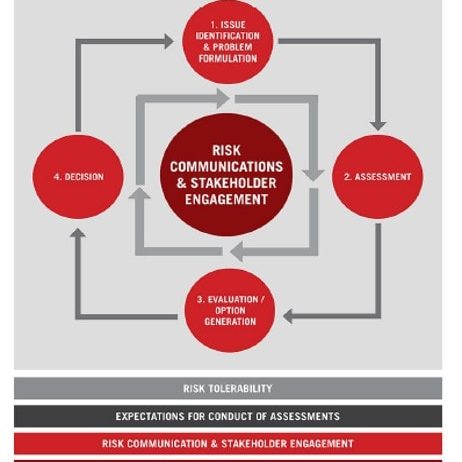
To enhance the oversight of cannabis production under its regulatory mandate, the Cannabis Directorate sought expert support in developing a risk-based decision-making framework tailored to its compliance and enforcement responsibilities. The directorate aimed to better assess and respond to non-conformance with Good Production Practices (GPP) as defined in the Cannabis Act and Regulations, using a data-driven approach.

To meet this objective, RSI was engaged to deliver a suite of tools and guidance documents supporting the design and application of risk-based methodologies. This included the creation of public risk lexicons and taxonomies for hazards, harms, and risk controls specific to cannabis production. A common measurement methodology was developed to assess diverse risks across the Directorate’s mandate, supplemented by preliminary risk estimates based on selected use cases. These estimates served both analytical and training functions.

RSI further supported the development of practical guidelines for risk assessment and led efforts to establish a data acquisition strategy that addressed gaps in existing program data. Foundational work also included designing a structured data model to integrate risk, control, and cost dimensions in a way that supported evidence-based decision-making.

Start: 2021

End: 2022

Experts related to this case study

Greg Paoli

CEO, Principal Risk Scientist

Greg Paoli is the CEO and Principal Risk Scientist at Risk Sciences International (RSI), a firm he co-founded in 2006 following the integration of his earlier consultancy, Decisionalysis Risk Consultants, with the consulting activities of the McLaughlin Centre for Population...
Read More about Greg Paoli

Anne Wiles

Senior Analyst

Dr. Anne Wiles joined Risk Sciences International (RSI) in 2008, where she currently serves as a Senior Analyst specializing in risk communication, perception, and governance. With a distinctive blend of expertise in language, regulation, and the use of science in...
Read More about Anne Wiles

More RSI Case Studies

RSI presents a very small selection of case studies to highlight some of its key work.
Risk-based decision making framework

The Alliance of Blood Operators (ABO) sought to move its members toward a consistent, transparent approach to risk-based decision-making. Having worked through the development of a framework, the organization now wanted formal adoption, external validation, and practical application to real-world...
Read More about Risk-based decision making framework

Age-Related Cognitive Decline: Systematic Review and Meta-Analysis

The College of Physicians & Surgeons of Alberta (CPSA) commissioned a systematic review and meta-analysis to support evidence-informed decision-making around age-related cognitive decline among practicing physicians. The initiative was led by CPSA’s Physician Health Monitoring Program (PHMP), which sought to...
Read More about Age-Related Cognitive Decline: Systematic Review and Meta-Analysis

Validation and Optimization of the Computational Tool for the Microbial Risk Assessment Framework (MRAF)

To support more consistent and quantitative assessments of new micro-organisms under the Canadian Environmental Protection Act, Health Canada's New Substances Program (NSP) sought to refine the tools and processes within its Microbial Risk Assessment Framework (MRAF). The NSP had previously...
Read More about Validation and Optimization of the Computational Tool for the Microbial Risk Assessment Framework (MRAF)

Development of a National Food Safety Information System and Risk Assessment Capacity in Vietnam

Authorities in Vietnam sought targeted expertise to strengthen the country’s ability to detect, assess, and respond to food safety threats. This initiative had two linked objectives: building a comprehensive, transparent, and reliable national food safety information system, and enhancing risk...
Read More about Development of a National Food Safety Information System and Risk Assessment Capacity in Vietnam

Food safety risk analysis tools

The World Health Organization and the Food and Agriculture Organization of the United Nations asked RSI to develop a suite of online tools to support food regulators and the food industry in applying risk-based approaches to food safety. These organizations...
Read More about Food safety risk analysis tools

Drinking Water Guidelines for Manganese

Establishing science-based drinking water guidelines for manganese requires integrating diverse regulatory approaches, emerging modeling tools, and evolving toxicological evidence. The client commissioned this project to systematically assess existing manganese drinking water guidelines and the scientific foundations upon which they are...
Read More about Drinking Water Guidelines for Manganese