
A Risk Sciences International news item posted on April 12, 2022 and last updated on April 12, 2022
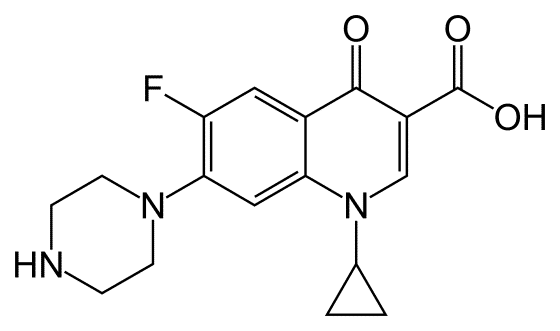
Quinolones, are a class of widely used and popular powerful antibiotics with broad coverage. RSI investigators, Mohamed Taher, Franco Momoli, Donald Mattison and Daniel Krewski, recently published a series of three papers on investigating the risk of acute liver failure (ALF) following systemic administration of quinolones, based on a synthesis of evidence from available clinical trials, the US FDA Adverse Event Reporting System (FAERS), and a large US database of electronic health records (EHR).
Although clinical trials provided little evidence of an increased risk, there were reports in FAERS of quinolone-linked ALF cases. Although the primary EHR analysis did not reveal an overall association between quinolones as a class and ALF risk, a possible risk was identified among those with no or few comorbidities, those ≤ 60 years of age, women, men, African Americans, and Caucasians.
The authors noted that elevated risks seen in some subgroups warrant further investigation.
More RSI News
RSI Provides Technical Advice and Review to Vietnam Partners and on-site Climate Support for Workshop
Engineers Canada is a partner with the German development agency Deutsche Gesellschaft für Internationale Zusammenarbeit GmbH (GIZ) in the execution of their Enhanced Climate Services…
Neil Comer to present at OPTrust Climate Change Symposium
The OPTrust Climate Change Symposium being held NOVEMBER 19-20, 2018 in TORONTO offers an opportunity to provide new insights into how to face climate change…
Emma Hartnett 2018 recipient of Center for Produce Safety (CPS) Research Award
CPS has recently announced 13 new research awards totaling a little over $2.6 million. The awards are for research projects directed at answering critical questions…
Best Practices for Consideration of the Effects of Climate Change in Project-Level Assessments
Risk Sciences International (RSI) is pleased to announce in collaboration with the Ontario Centre for Climate Impacts and Adaptation Resources (OCCIAR), the public release of…