
A Risk Sciences International news item posted on April 12, 2022 and last updated on April 12, 2022
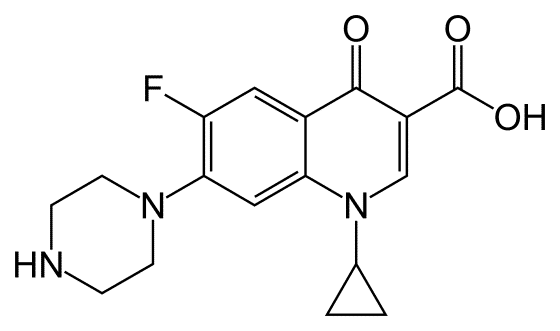
Quinolones, are a class of widely used and popular powerful antibiotics with broad coverage. RSI investigators, Mohamed Taher, Franco Momoli, Donald Mattison and Daniel Krewski, recently published a series of three papers on investigating the risk of acute liver failure (ALF) following systemic administration of quinolones, based on a synthesis of evidence from available clinical trials, the US FDA Adverse Event Reporting System (FAERS), and a large US database of electronic health records (EHR).
Although clinical trials provided little evidence of an increased risk, there were reports in FAERS of quinolone-linked ALF cases. Although the primary EHR analysis did not reveal an overall association between quinolones as a class and ALF risk, a possible risk was identified among those with no or few comorbidities, those ≤ 60 years of age, women, men, African Americans, and Caucasians.
The authors noted that elevated risks seen in some subgroups warrant further investigation.
More RSI News
Decision making framework developed for Canadian Blood Services (CBS) now online
RSI was contracted by CBS to assist the Alliance of Blood Operators in the development of a blood-safety oriented risk-based decision-making framework. Why use this…
RSI speaks to The Weather Network about wildfires and climate
2017 was a record-setting year for devastating wildfires across Canada and throughout the world. The Weather Network spoke to Heather Auld, principal climate scientist about…
RSI paper on Manganese PBPK selected as a top 2017 paper
Each year the Society of Toxicology, Biological Modeling Specialty Section (BMSS) does a literature search to identify outstanding modeling papers in the field of toxicology.…
RSI and Engineers Canada develop on-line training courses
Engineers Canada has retained Risk Sciences International’s (RSI) Climate Group to develop training course modules and to deliver on-line training to Professional Engineers seeking to…