
A Risk Sciences International news item posted on November 4, 2025 and last updated on November 4, 2025
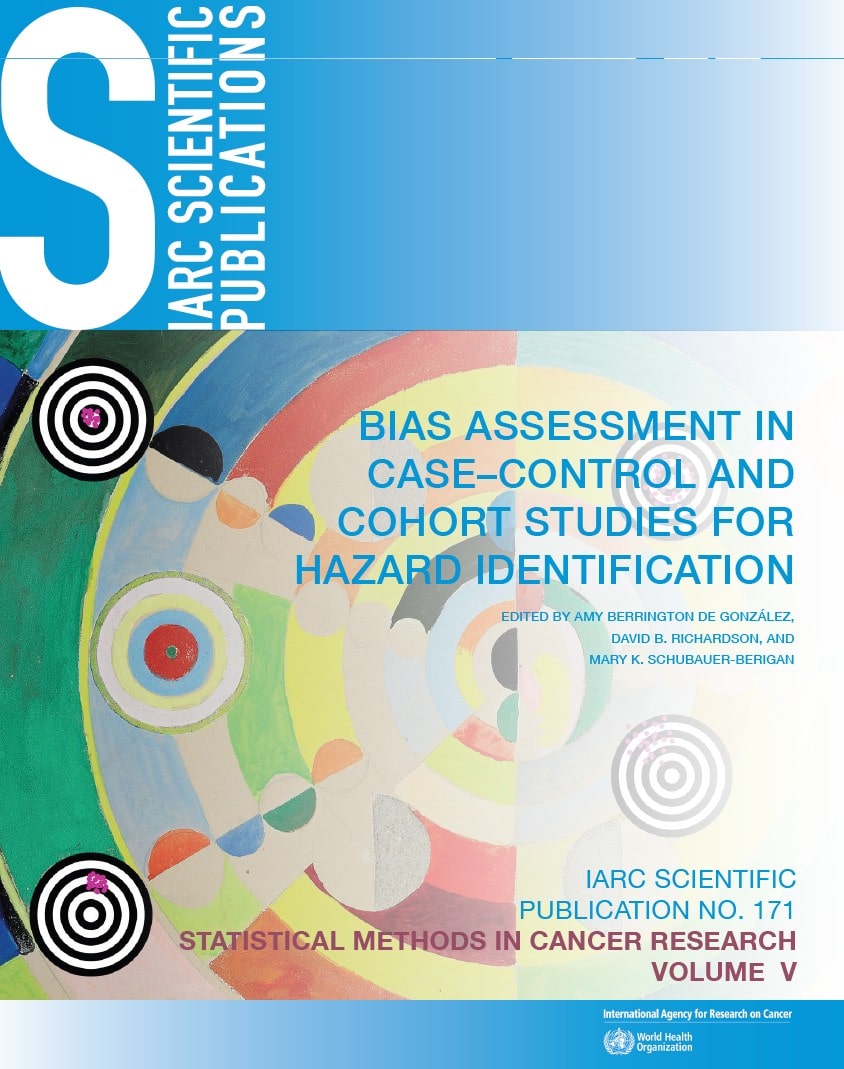
IARC recently published a volume on quantitative bias modelling: Bias assessment in case–control and cohort studies for hazard identification (IARC Scientific Publication No. 171). We are pleased to see inclusion of some of the work RSI’s Drs Franco Momoli and Daniel Krewski conducted for the INTERPHONE and MOBI-Kids studies of cell phones, radiofrequencies, and brain tumours as examples in the text. The IARC publication includes several fantastic resources that epidemiologists can add to their statistical armamentarium. This entails using data external to the study to address unmeasured confounders, measurement error on variables, and issues arising from selection into and out of study populations.
These methods, while still not widely adopted, are found in several modern epidemiologic textbooks, and they deserve wider appreciation. Recommendations have been made to use quantitative bias methods to more transparently discuss study limitations, to understand the robustness of study results during journal peer review, and to properly characterize sources of systematic bias in regulatory contexts. The first step is often planning for this work at the grant funding stage.
Work conducted by Risk Sciences International for Health Canada has also involved these approaches with benchmark dose modelling leading to deriving health-based regulatory values for drinking water and air quality. These methods typically use high quality key epidemiologic studies that, nevertheless, had limitations that deserve quantitative characterization of uncertainty.
Experts related to this news item


More RSI News
Decision making framework developed for Canadian Blood Services (CBS) now online
RSI was contracted by CBS to assist the Alliance of Blood Operators in the development of a blood-safety oriented risk-based decision-making framework. Why use this…
RSI speaks to The Weather Network about wildfires and climate
2017 was a record-setting year for devastating wildfires across Canada and throughout the world. The Weather Network spoke to Heather Auld, principal climate scientist about…
RSI paper on Manganese PBPK selected as a top 2017 paper
Each year the Society of Toxicology, Biological Modeling Specialty Section (BMSS) does a literature search to identify outstanding modeling papers in the field of toxicology.…
RSI and Engineers Canada develop on-line training courses
Engineers Canada has retained Risk Sciences International’s (RSI) Climate Group to develop training course modules and to deliver on-line training to Professional Engineers seeking to…